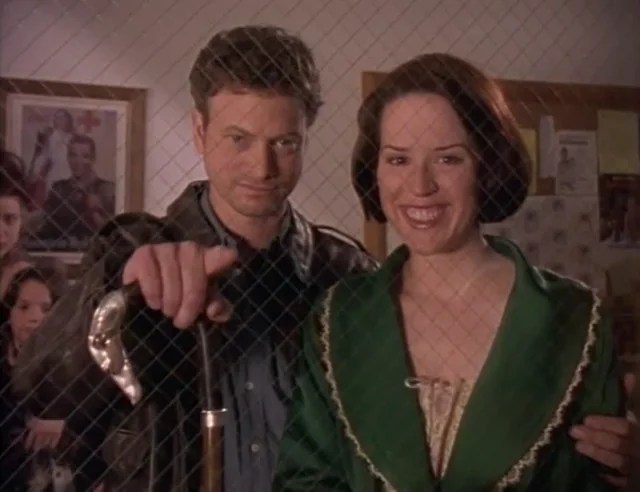
12 May, 1994, brought us the fourth episode, and the conclusion of the Mick Garris-directed adaptation of Stephen King’s gigantic book, The Stand.
The story is moving to its conclusion as the pieces of good and evil are finally arrayed for the last battle. Harold (Corin Nemec) is cast aside by Randall Flagg (Jamey Sheridan), he’s no longer needed, while Nadine (Laura San Giacomo) continues on her journey to the Walkin’ Dude.
Stu (Gary Sinise) and his people are closing in on Las Vegas, but will they be ready for what they find? There are crucifixions, brutal laws, and oh yeah, watch for cameos by Sam Raimi and John Landis! Flagg’s people, at least those who are higher up and selected by him, live a life of ease, with alcohol and sex, unless they get on Flagg’s bad side.
Sides are chosen, and of course, characters that we’ve followed on both sides will fall.
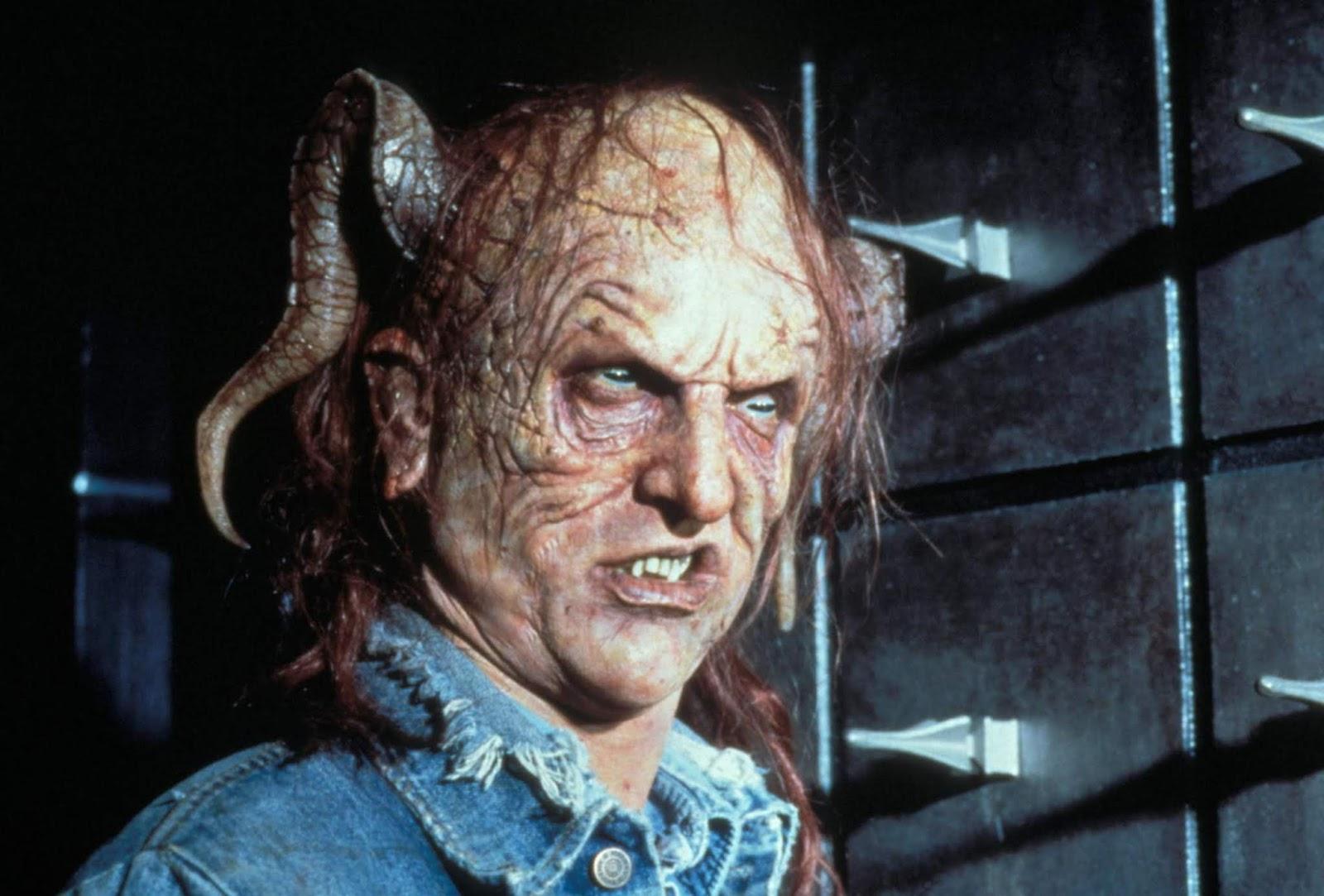
Flagg shows a different incarnation of himself, more in line with the devil that he’s supposed to be in this reality.
The heroes’ spies will be revealed, and consequences will be dealt. What does Flagg have Trashcan Man (Matt Frewer) working on? Who will survive, who will fall, and will Flagg claim victory, or is there a higher power at work? Do all things serve the beam?
Will there be redemptive arcs for characters, or are they already set on their paths? And who will make it back to their loved ones? And what will happen in the world following the Stand? Whatever is happening seems to be all the plan of something or someone… but what does it all mean?
As we come to the close of the miniseries, which was adapted by King himself, I have some thoughts. I remember it was big at the time, but a lot of the dialogue is clunky, as mentioned previously and seems a little too melodramatic or soap opera. The visual effects are iffy, but they worked with what they had.
I know we recently had a new version, but I quite like the cast in this version. I just wish it had leaned into the dreams and metaphysical connections that develop between some of the characters. Make it a little spookier, and arguably, longer, so that characters and moments could be explored, or maybe some of the other moments in the series could have been cast aside to further delve into these angles.
Overall, the miniseries remains engaging, I think largely because of the casting. The story is solid, though it really comes down to good versus evil and the literal hand of god. It’s not horrible, and it definitely captivated audiences, but the book is so much stronger than this version, or the more recent one.
Still, it’s an impressive piece of work when you consider how the series had to work within broadcast standards, and work on television budgets.
But now, I want to read the book again… I haven’t read it in decades, so maybe it’s almost time again.