Cottage Country.
That phrase conjures a specific image for residents of Ontario, Canada. The calls of loons, sitting on boat docks and enjoying the peace of the lakes, an escape from the hubbub of city life; cottage country is a Canadian summer tradition.
You wouldn’t expect to find a multiplex amongst the forests, the bears, the getaway cabins, and the small towns that dot the river and lake shores, but this is where Keith Stata was raised, staked his claim, and proclaimed his love of cinema by creating Highlands Cinema.
In the town of Kinmount (pop. 500), Keith first wanted to make films, but when that didn’t play out, he turned to showing them, slowly transforming, and building, his home into what is now five lovingly designed theatres.
Over the decades, with his first screening in 1979, starting with one 60-seat theatre, the theatre has grown, sprawling outwards, all overseen by Stata. Highlands Cinema has become a touchstone for countless visitors from across the globe, who escape to cottage country each summer, and his first-run films draw audiences who find themselves completely enchanted by the museum that has sprung up in the labyrinthine hallways that connect the theatres.
Not to mention the cat preserve, which currently houses fifty-eight felines on the grounds.
Tucked away in cabinets, on shelves, and on the walls are memorabilia from the decades past, pop culture standouts, personal moments, lobby cards, collectibles, toys, posters, mementos, and a jaw-dropping collection of film projectors from every era. The Horror Hall is a particular favourite.
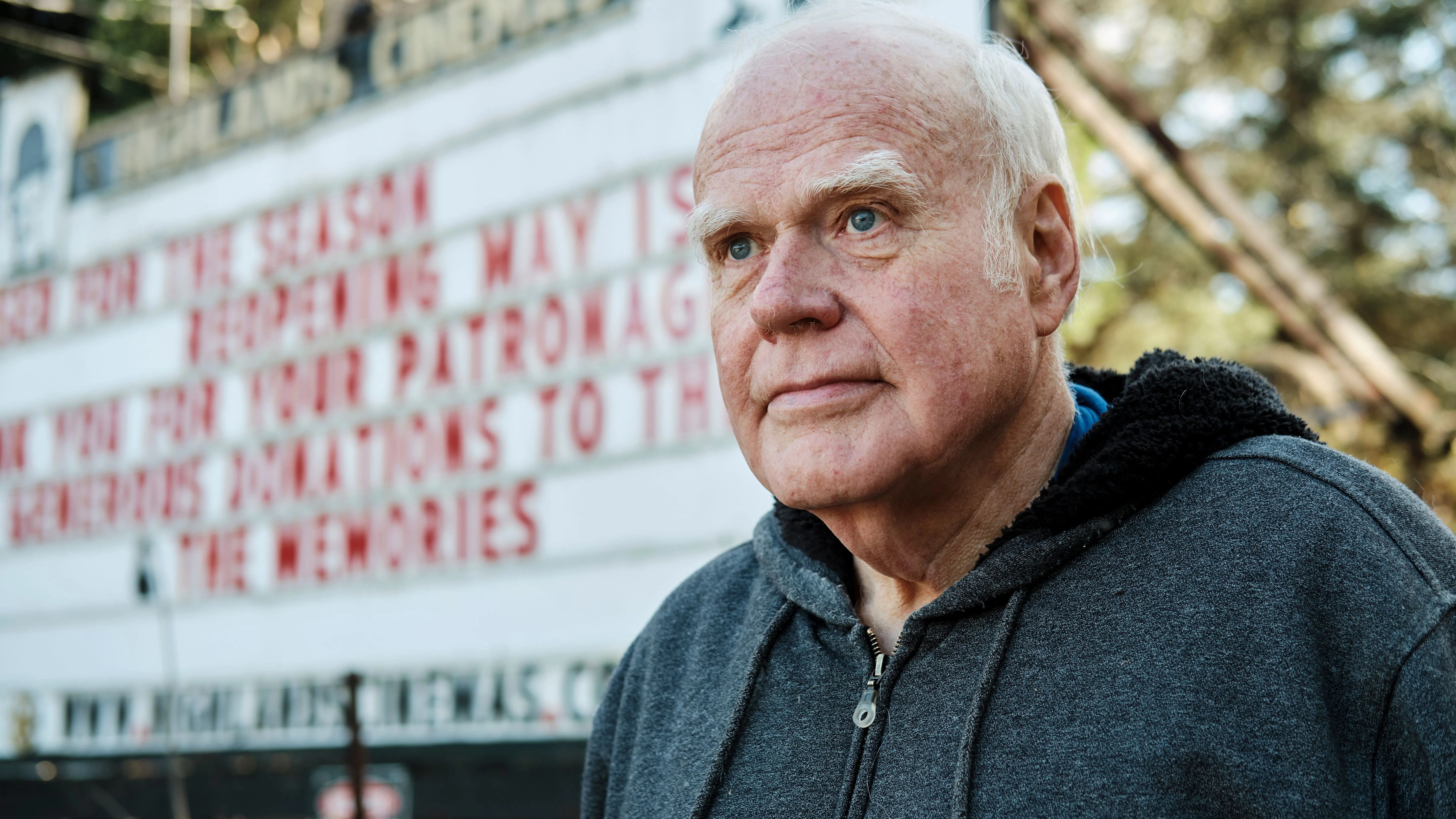
Keith takes his clientele, and the film’s viewers in with his wonderfully blunt and playful humour, even as he waxes philosophic about George Pal’s The Time Machine, his favourite movie and what he would do with a time machine of his own.
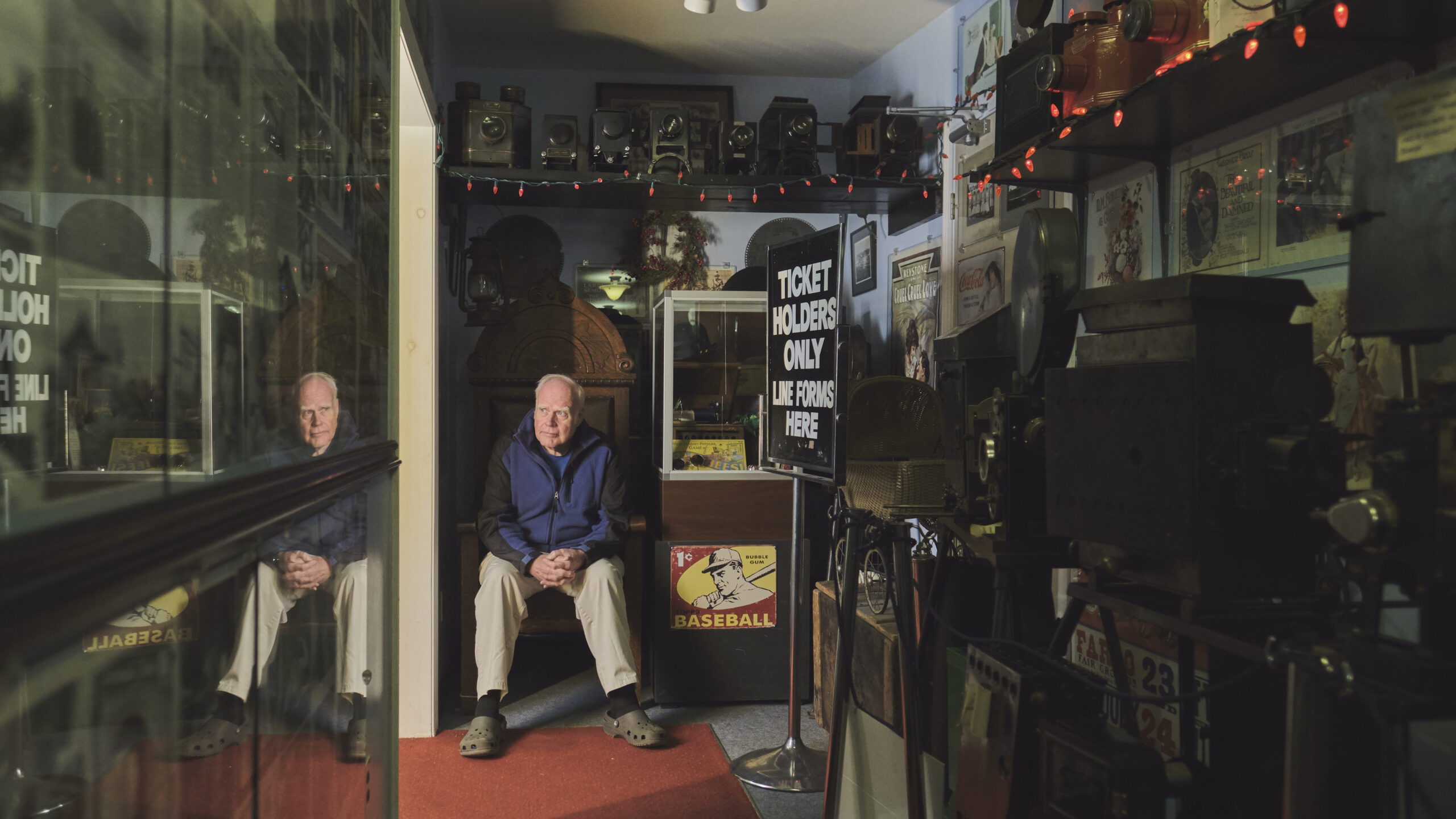
Director Finlin uses that theme as a throughline for the film, even as we watch the decades pass and affect Keith. It all got much more complicated when COVID forced the closure of the Highlands for two seasons, and the subsequent financial troubles the pandemic created for this small, but beloved business.
Finlin puts Stata front and centre through it all, documenting personal and professional triumphs and falls as he works to keep the theatre open, perhaps a little profitable, and continues to make the Highlands the most unique cinema-going experience on the planet.
Through interviews with Kinmount residents, the film offers up commentary on Keith that he wouldn’t say about himself, including how important his love of film is, what he and his theatre have done for the town of Kinmount and its surroundings, and the experiences he’s given its countless visitors.
As age and time continue to march onwards, we are left to wonder what the fate of Keith and the Highlands Cinema will be. Could it be declared a cultural or historical site? I’m sure it could be, and should be.
Finlin’s film is beautiful, as layered as the Highlands’ displays, and offers up a look at not only one man’s love of movies but the effect of the pandemic on small businesses everywhere, those businesses that provide unique experiences that we, as a society, can ill-afford to lose.
Inspiring, emotional, and a commentary on that shared communal experience of sitting in a darkened room watching that flickering, story-telling light (something that can’t be replicated on a phone screen, or in a home theatre, no matter how good it is) The Movie Man is a MUST watch for anyone who loves movies.
And if you’re within a two-hour drive of Kinmount, Ontario you should treat yourself and drive up to the Highlands Cinema, wander the halls, chat with the staff, and say hi to Keith; there is movie magic here of a kind you have never seen before, and it should be lauded and celebrated, experienced firsthand.
But if you can’t make the trip, do yourself a favour and check out The Movie Man on Hollywood Suite starting 7 August, 2024.

 The Mind Reels