
James Gray delivers one of the most authentic looks at space travel since Kubrick’s 2001: A Space Odyssey, throw in a little of Conrad’s Heart of Darkness and you have the basic groundwork for this science fiction drama that sees astronaut Roy McBride (Brad Pitt) travelling to the outer reaches of our solar system, all the way to Neptune to discover the truth about what happened to his father, astronaut Clifford McBride (Tommy Lee Jones) and something that may wipe out all life in the solar system.
Clifford McBride was part of the LIMA project which was designed to sit at the edge of the solar system and try to discover signs of life in the universe. Something happened out there. And now thirty years later, energy pulses from Neptune are disrupting power sources on Earth and it’s colonies across the system. If they aren’t stopped they could destroy all life.
Roy is brought in, and it is revealed that the pulses may be coming from the LIMA project, that his father may still be alive, and they need him to reach out to his father via transmission from Mars to ask his father to stop the antimatter reactions that are threatening the system.
But Roy’s going to have to go further than Mars, he’s going to have to travel all the way to Neptune to learn the truth.
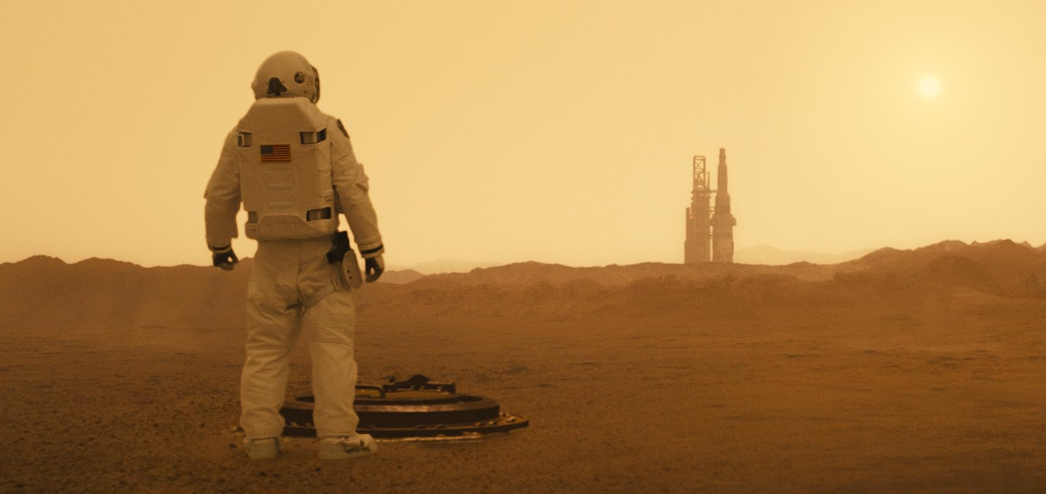
Filled with practical effects, and an amazing portrayal of life in space I was swept up in this tale. But, like its predecessor, 2001, it may not be for everyone. Especially those looking for sound in space, or an intriguing alien reveal. The story is very much about the human heart, the distances between us that separate us all, and the connections we forge in an attempt to understand ourselves, one another, and our place in the universe.
The production design, the costumes, the ships, and the science all feel authentic, with some of it just beyond our current grasp. Pitt also provides a narration throughout the film layering out his character, the narrative, and the relationship with his father.
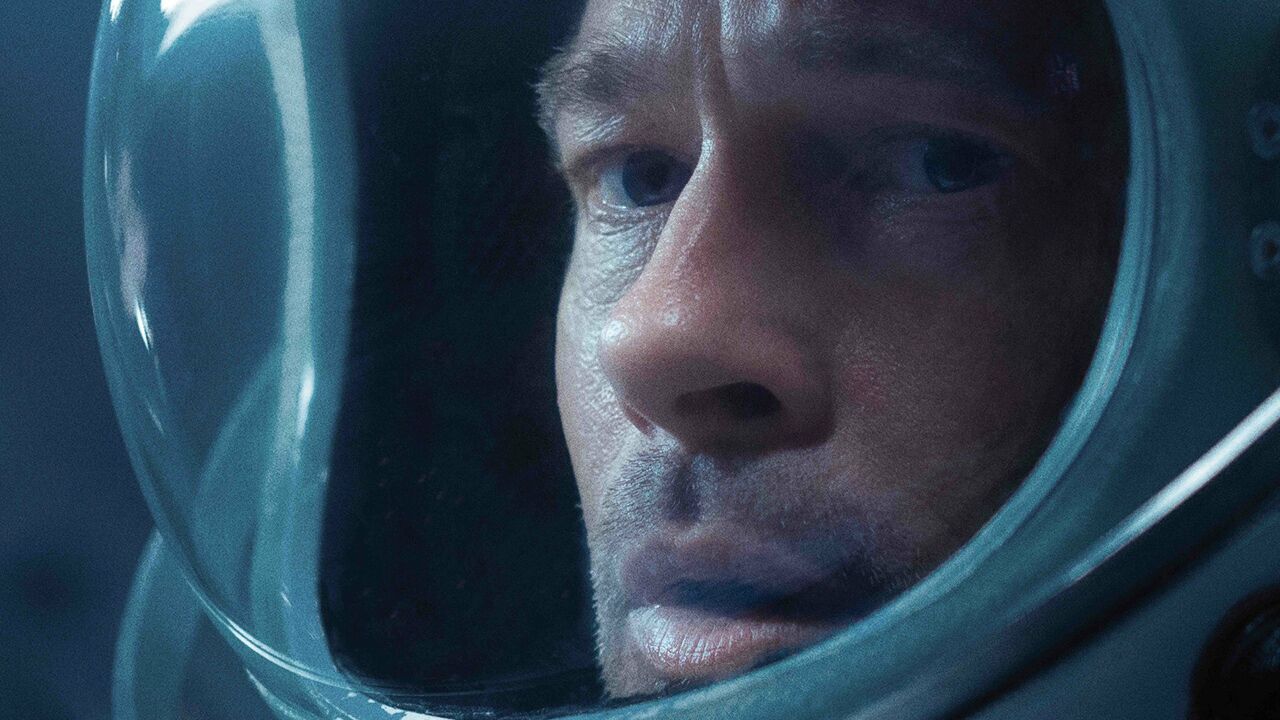
I really enjoyed this one, well except for parts of the ending and what it suggests for us as a species and our place in the universe. Pitt is believable as a man fixed on his mission and on discovering his own truth and he’s surrounded by a great cast, not only Tommy Lee Jones, but Donald Sutherland, Liv Tyler, Loren Dean, and Ruth Negga.
This one feels smart, well-thought-out, and well-crafted. And I can even make myself feel better about the ending because Clifford doesn’t see everything just somethings.
But wow, some of the sequences are gorgeous to look at and show, once again, how practical effects can lend a reality to the film that some visual effects just can’t match.

 The Mind Reels