I love movie posters as much as I love movies, and as far back as I can remember, I can recall cutting black and white facsimiles of posters from newspapers and taping them to my wall, until I was able to start buying them (or bringing them home from work – a bonus of having worked at a video store).
I love the art, the design that goes into them, and most of all, I miss when posters were works of art instead of photoshopped images of the film’s stars.
DK Canada’s James Bond: 50 Years of Movie Posters is a prime example of this. Bond films have always been a reflection of the times in which they are shot, and their accompanying marketing materials are the same. From the cautious, yet colourful introductory poster of Dr. No, the film’s posters reflect the marketing designs of the time, and sometimes transcend it to become iconic – like the tuxedo posed hero, to the gun barrel logo, to the pistol jutting from the 7 in 007. The posters highlighted the charm of the super-spy, the sex appeal, and the violence that seemed to surround him, constantly.
Film buffs know likes of Drew Struzan and John Alvin, but would no doubt recognise the works of Robert McGinnis and Frank McCarthy, as their association with James Bond, helped to create some of the most eye-catching posters of the series.
But it’s not only the western marketing of a film that I find interesting, it’s fascinating to see how different markets are advertised to, how images are adjusted, or completely changed to suit the perceived audience. Under Dougall’s guidance, the book takes us from the almost quiet cinematic beginnings of Dr. No all the way through to the teaser poster for Spectre.

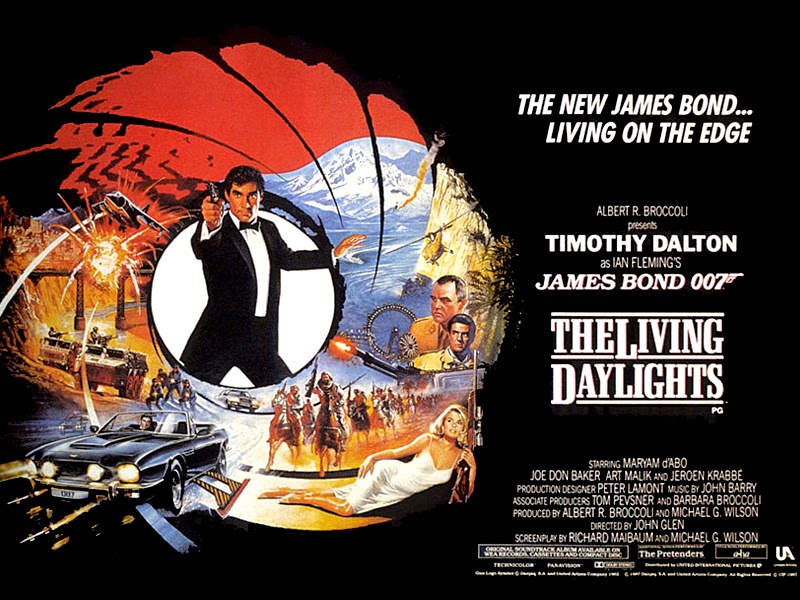
There is stunning art from around the world, as we see the growth of an icon, a trademark, and how much it has, and hasn’t changed over the decades. I lament the loss of the movie poster as art, and the last truly gorgeous Bond poster art was The Living Daylights by Brian Bysouth. From there it moved onto photo manipulation, and the painting, sketching and art gave way to digital creations, and the standardisation of a poster design the world over.
Now a photograph can be gorgeous art, but it doesn’t always serve the purpose of creating excitement for a film, it merely highlights the actors involved, and perhaps a hint of the style and design of the film. Classic posters elicit the excitement generated by the film, sharing moments, building awareness, and highlighting the spectacle and Bond movie posters did that incredibly well.
Don’t believe me? Thumb through this book! Beautifully compiled, it takes you through all the films, and all the art used to market them. While definitely a bit of a must for Bond aficionados, this book would be welcomed by anyone who loves poster art, to see its growth and changes over 50 years, perhaps mourn the transition like I do, and recall those beautiful images of yesteryear.
I loved this book! Check it out from DK Canada, today!

 The Mind Reels