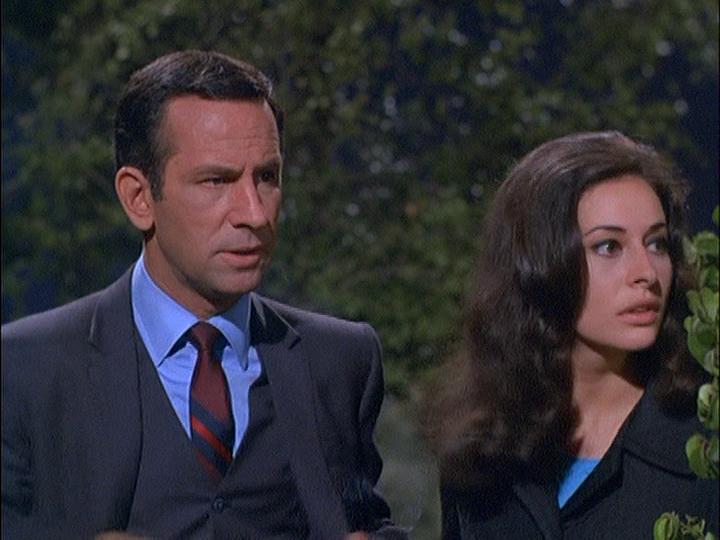
Maxwell Smart (Don Adams) and 99 (Barbara Feldon) have to dabble with the paranormal for information in The Spirit is Willing. First airing on 14 October, 1967, this episode was written by Arne Sultan.
A seance needs to be conducted to get information from a dead informer. Wackiness ensues.
Ann Ferris (Ina Balin) meets with Smart in a cemetery, asking for money for information that could convict an undercover KAOS agent. She promptly disappears, and when Smart checks in with 99, she informs him that Ferris is dead!
They run down some leads, but it’s going to be a spooky investigation. He and 99 go to see Madame Borova (Peggy Mondo) for help. The seance seemed to go well, but all of this may be a ploy, by KAOS, as Ferris’ mother, looks a lot like her ‘daughter’ and she may be helping Vogel (Len Lesser) to defect from KAOS.
But KAOS agent Mondebello (Thann Wyenn) wants to stop the defection!
Can Smart and 99 figure it all out and save the day?
It’s fun, and the sets, obviously sets – I’m looking at the cemetery – are just a delight. And the dialogue is pretty clever, though some of it is just flat out silly. Three seasons in and the show is definitely still delightfully entertaining.
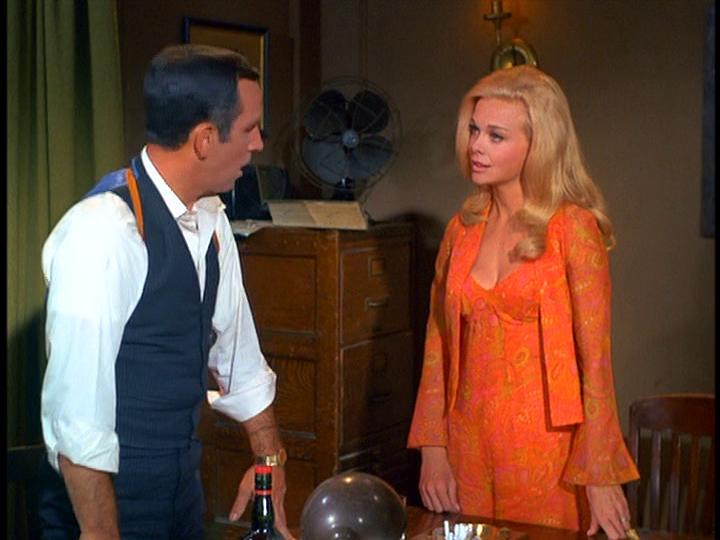
Maxwell Smart, Private Eye debuted on 21 October, 1967. It was written by Elroy Schwartz.
Tough financial times have hit CONTROL once again, and Smart has to moonlight as a private investigator.
This lets the series play with film noir and detective story tropes, eschewing some of the spycraft, at least for an episode.
99 comes along as Smart’s secretary, Buddy Hackett makes an uncredited appearance, and the episode won director Bruce Bilson an Emmy. And Smart, he has to juggle his case work, and his CONTROL assignments.
We also see the first appearance of 99’s red revolver.
Of course, there’s a dangerous case, a dangerous dame, and a couple of thugs. It leans into all the tropes, and has a lot of fun doing it. Adams leans in to a Bogart impression, and everything seems designed to get the most out of the episode, and the story.
Not that I don’t think Bilson deserved the Emmy, but you would think that the show would have leaned into more of the visual style of detective films – moody lighting and the like. The series is just colourful and bright.
But it is funny.
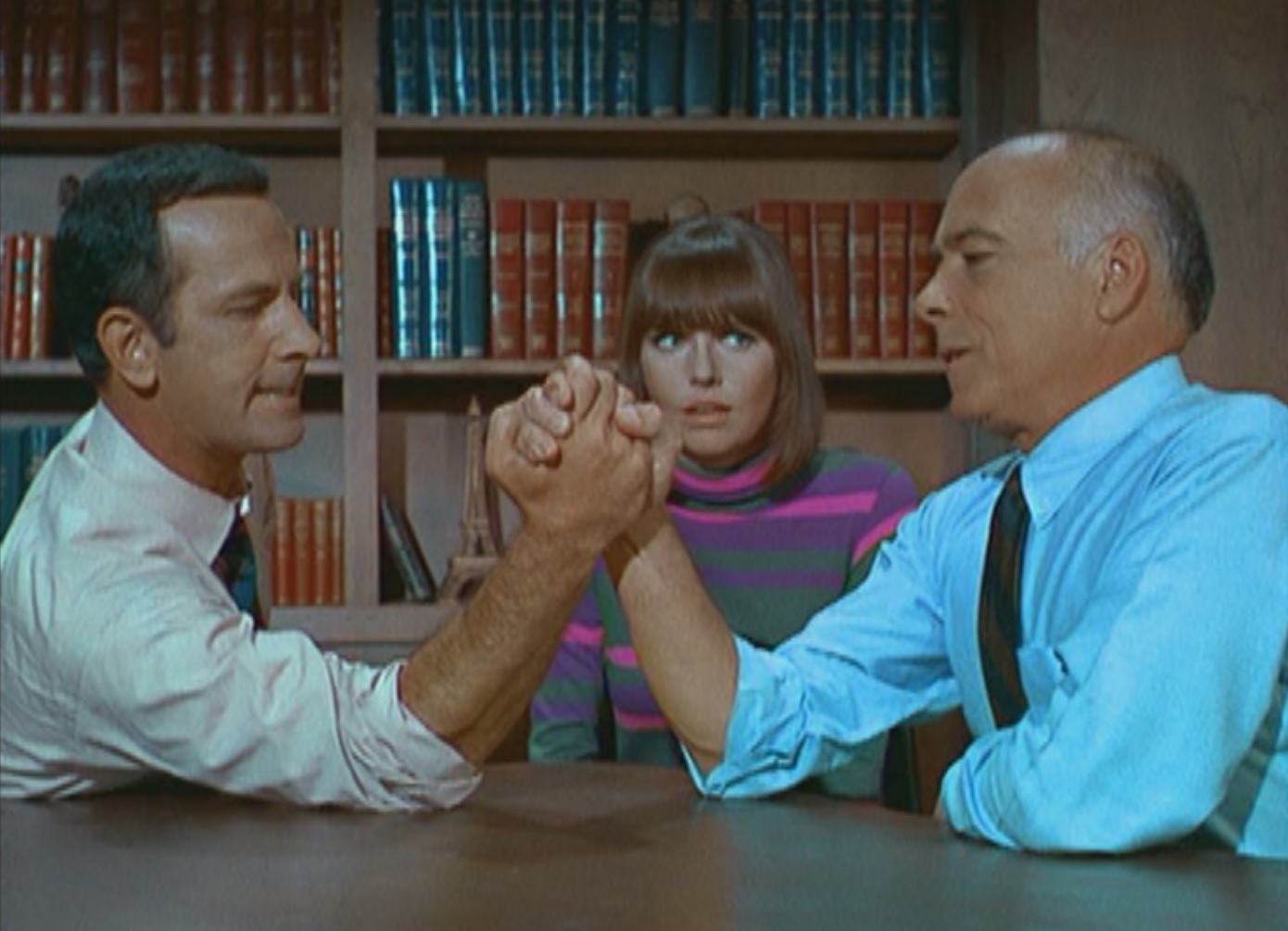
Supersonic Boom was written by Ben Joelson and Art Baer. It first aired on 28 October, 1967.
KAOS has a device that create devastating sonic booms at will. And they plan to use it on New York City if they aren’t given fifty million dollars. It looks like Smart will have his work cut out for him this time.
I love that KAOS has its own tv studio to interrupt broadcasts and they’re always so friendly on air.
There’s lots of fun to be had in this episode, and some nice location work, at least for Smart’s car.
There’s a secret KAOS base in a car wash, a fun simulated car and plane ride (which is quite comedic), and recognizable character actor Alex Rocco makes an appearance as a KAOS villain.
Oh, and I’m sorry to say I hate 99’s orange short suit.
This one plays like a James Bond film, without the exotic travel (because 99 and Smart are blindfolded and tricked), there’s a doomsday device, some gadgets, and a dastardly villain.
The series has found its groove, has its catch phrases, and it’s now iconic characters. I’m watching Get Smart… and loving it.

 The Mind Reels