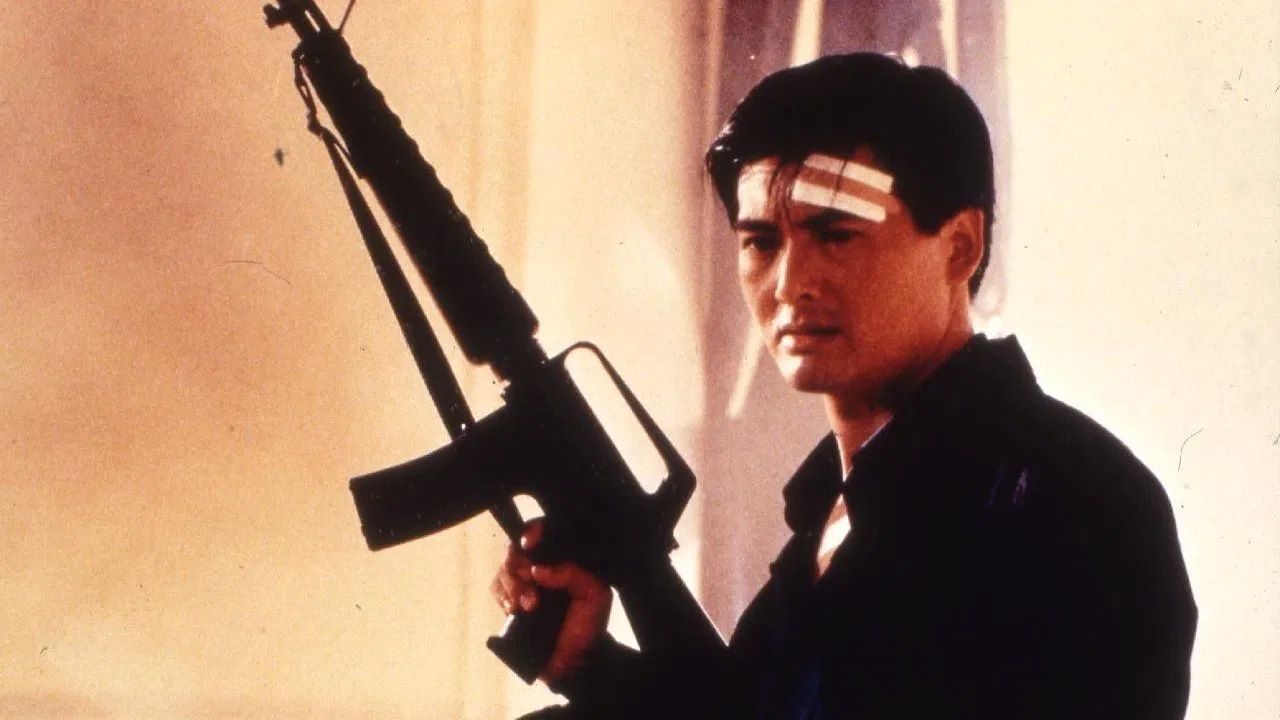
Did we need a prequel to the A Better Tomorrow series that shows us how Mark (Chow Yun-Fat) became the man he was in the first film? Were we wondering where he got his aim, his sunglasses and duster from?
I wasn’t but apparently someone thought we were. Hark Tsui takes over as director after ousting John Woo after their disagreements on the second film. I will say this, he does feature some smooth and frequently moving camera work.
Mark has arrived in 1974 Vietnam. He’s arrived to help his cousin, Chi-Mun (Tony Ka Fai Leung) and Chi-Mun’s father (Shih Kien) get out of the country. While he’s there, he meets Ying-Kit (Anita Mui), a female gangster who seems to be everything Mark was in the first film (gee, I wonder who is influences are?).
A love triangle forms between the trio, complicated by the business Ying-Kit is in, counterfeiting, and her ex, Ho (Saburo Tokito) runs.
They work to get Mark’s uncle out of Vietnam to Hong Kong, but trouble follows them, and Ho executes Mark’s uncle, and drives the boys out of Hong Kong.
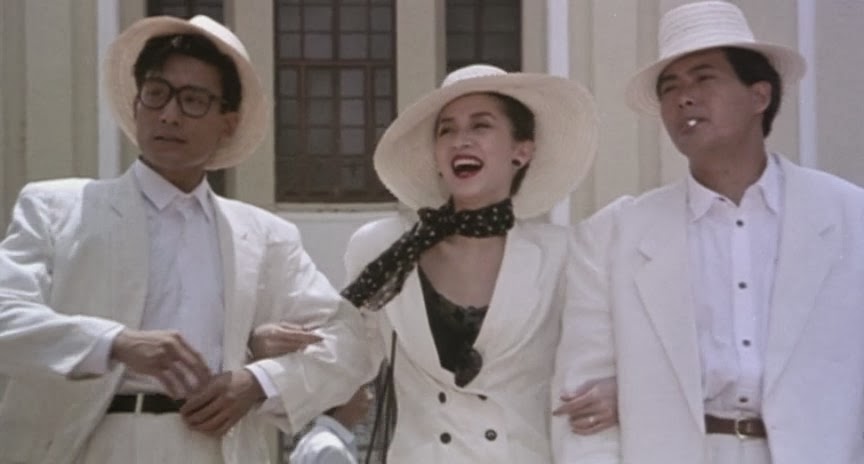
Struggling with the triangle, Ying-Kit returns to Saigon, and gets herself in more trouble. So they head back to Vietnam to hopefully find a better tomorrow.
When Chi-Mun is almsot killed, Mark is ready to go all in, and finally become the character we met in the first film. And, of course, since we haven’t seen any of these characters besides Mark in the other film, we know how it has to play out for everyone but him before the credits roll.
The romantic melodrama is saccharine. In fact, all the melodrama is a little goofier than needed, but the action beats are alright, though they don’t have the balletic nature that Woo imbues his images with.
I wonder what Woo’s take on III would have been? Or if he would have taken the series in a different direction? How may other twin brothers could Mark have had?
Overall, it’s a bit of a slog. It doesn’t work as well as Woo’s entries. But there are some really nice moments in the film. Chow Yun-Fat is always exemplary, and while it’s interesting to see him bring an earlier version of Mark to life, we didn’t really need this entry in the series.
It’s an interesting trilogy of films, with the final entry being a little more rough around the edges than the other two. In fact, I would tell other viewers to just forget the third film and just enjoy it as duology.
But having said that, I’m sure there are those out there who love this entry and are ardent defenders of it. It just didn’t work for me as well as the other two films in the series. I will say this though, I think I may be digging up other Woo films I haven’t seen in the near future.

 The Mind Reels