
Alex (Micheal J. Fox) finds himself in an ethical dilemma when he’s made editor of the school paper. Big Brother is Watching was written by Ruth Bennett and originally aired on 17 November, 1982.
Within moments of getting the position he’s presented with a story that involves cover-ups and lies, their school has a very high rating when it comes to test scores, and it seems the principal is aware that there is cheating going on and covers it up.
Things get more complicated when he learns that his sister, Mallory (Justine Bateman), is among the cheaters.
After a discussion about truth in journalism with his dad (Micheal Gross) and mom (Meredith Baxter) he not only publishes the story, but he lists all the cheaters in the article.
Things blow up at school, Alex is shunned because of his actions, loses his place as editor, has a follow-up conversation with his parents about the necessity of compassion in journalism, and Mallory reveals how she struggles to be Alex’s underachieving sister.
There are some interesting ideas going on in the discussion about journalism, it’s not covered or explored as well as it could have been, but again generates important conversations, as well as the need for compassion in all things, even Alex begins to understand that, realizing he could have published the article without listing names. He’s definitely not a 21st-century Republican.
By the episode’s end, Mallory and Alex have worked to patch up their relationship, and Alex tries to help her with her math homework.

No Nukes is Good Nukes was also written by Ruth Bennett, and first debuted on 24 November, 1982. It’s Thanksgiving in the Keaton household, and Elyse’s (Baxter) parents, Charlie (Dick Sargent) and Kate (Priscilla Morrill), are coming, but she and Steven (Gross) are planning to go join a demonstration against nuclear weapons.
Alex doesn’t understand why his parents are protesting, he believes that they need as many nuclear weapons as they can to deter the Russians. A view that Elyse’s parents share.
While Jennifer (Tina Yothers) is all about watching the game, but eventually she, Alex and Mallory end up watching soap operas.
Things seem to be going well, until the demonstration apparently gets too rowdy for the authorities, and Steven and Elyse end up arrested and in jail for the holiday. The judge draws up a statement and agreement that says they can be released if they agree never to protest about nuclear weapons again – and you know they can’t do that.
This causes some grief between them and Alex and Charlie, but also generates a discussion about the right to demonstrate, and the need for some control over nuclear proliferation. They come to a bit of an understanding with one another when the family shows up to enjoy Thanksgiving with their jailed parents.
They may not agree on everything, but they’re still family, and once again, everyone realizes the importance of standing up for your beliefs.
It’s a lighter episode that doesn’t quite dig in enough to the subject matter as it could, and it could be glossed over with all the other things going on, but it does have some important things to consider about the right to demonstrate, and nuclear control.

Death of a Grocer was written by Micheal J. Weithorn and first aired 1 December, 1982.
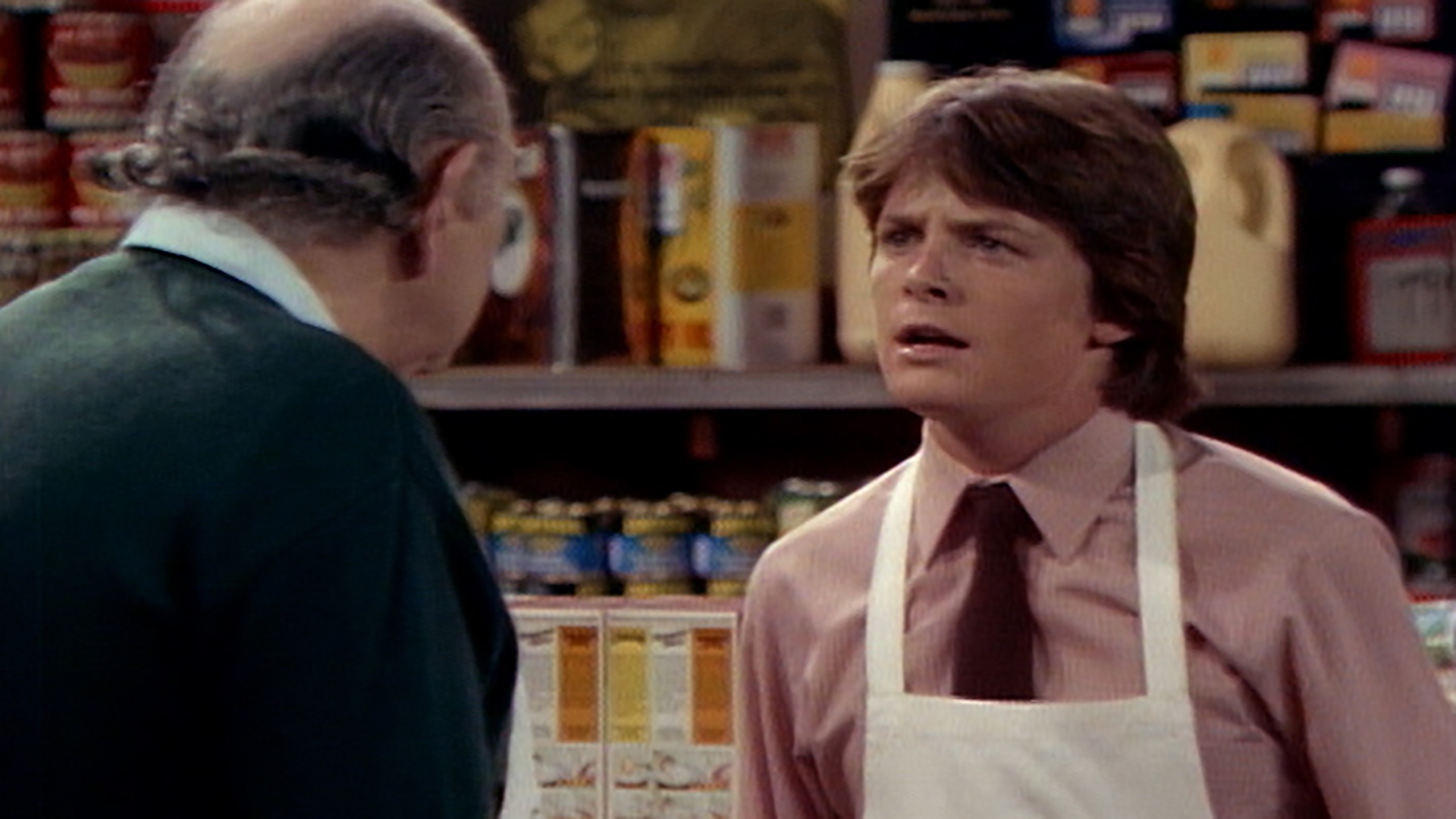
We get a look at Alex’s place of work, Adler’s Grocery. It’s a small, corner grocery store and run by Mr. Adler (Jack Somack) for the past couple of decades. Alex, however, decides to take a better-paying job at a larger grocer.
The episode also introduces Skippy (Marc Price), a recurring character who crushes on Mallory and proves himself to be a real family friend. It’s Skippy that suggests Alex hunt down the new job, where he can get more money, and perhaps even a promotion.
But when he gets the job and ends up with the new position, leaving Mr. Adler behind, he begins to wonder if he made the right decision. He doesn’t feel as appreciated and fulfilled working in the large shop, as he did working with Mr. Adler.
He does more and gets more respect from working with Adler than at the larger shop where he is referred to by his employee numbers.
Does that mean there’s a commentary on the necessity for smaller businesses over large faceless corporations? Is it a commentary on the way employees are treated? If it is, neither of them is really explored a lot, but in the end, Alex does decide to go back to Adler’s, where he’s appreciated, respected and feels valued.
Man, I love this show.

 The Mind Reels