I remember the first time I watched Close Encounters of the Third Kind. It was 1984, it was my 13th birthday, I had read the fotonovel from the school library, was fascinated by the subject matter (I still am), and though I had seen the rubber toys in grocery stores when the film came out, I never saw it until I was ready for it.
Since that time I’ve seen the film (in its various versions) countless times, stared at the night sky as I listened to the score by John Williams, and discovered wonderful little trivia bits (the R2-D2 on the mothership) so when I came across The Ultimate Visual History, I had to pick it up and delve deeper into one of my favourite Steven Spielberg films.
Klastorin takes us through the whole production, from the story’s creation, one of Spielberg’s only script writing credits, through production, effects, and post, all of it is explored and documented. There are reproductions of script pages, notes, telegrams, and tons of production photos.
All of this brings the story behind the film to life in a way that I hadn’t explored before. Sure I’d watched the docs on the blu-rays but Klastorin goes in-depth, making everything accessible and incredibly readable.
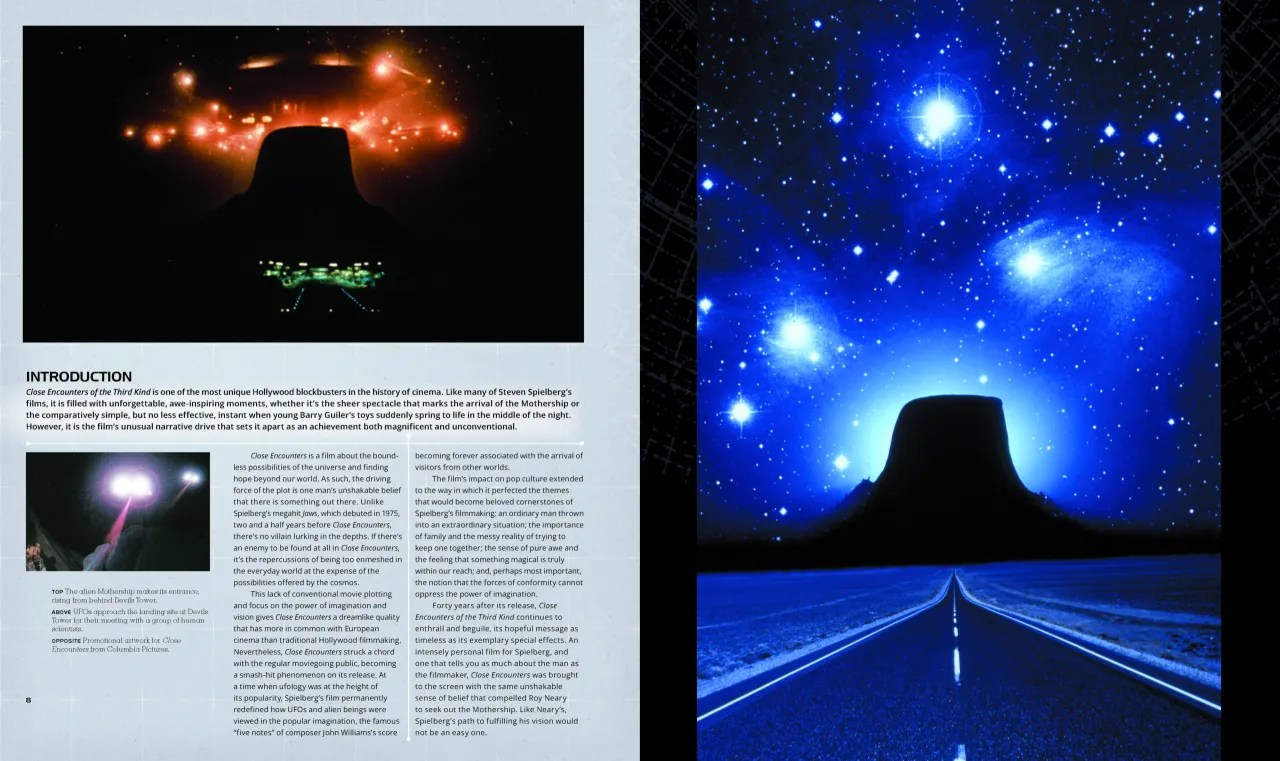
I learned all manner of things I didn’t know previously about location scouting, matte paintings, the creation of the EBEs, the way the UFOs were shot to make them as believable and otherworldly as possible, and the casting. It’s all here in the pages of this book, documented beautifully and set amidst stunning pictures and stills.
It’s a completely engaging read and is a must not only for those who love this film but anyone interested in how films are made. It’s a fascinating document exploring how an iconic film was made, and how the pieces came together and created cinema magic.
The text includes interviews with the cast and crew, giving insights into what things were like on the day, and how challenges were met and overcome, or avoided.
It also explores the Special Edition, why it was created, what Spielberg’s terms were to give a glimpse inside the mothership, and how it helped create the versions that followed. There’s the theatrical cut, the special edition, and the final director’s cut, each version has its fans, and I love them all and I can’t wait to settle in and watch each one again with new eyes knowing what I know now about the making of the film.
I loved exploring this book and re-re-re-discovering the magic of this film.


 The Mind Reels